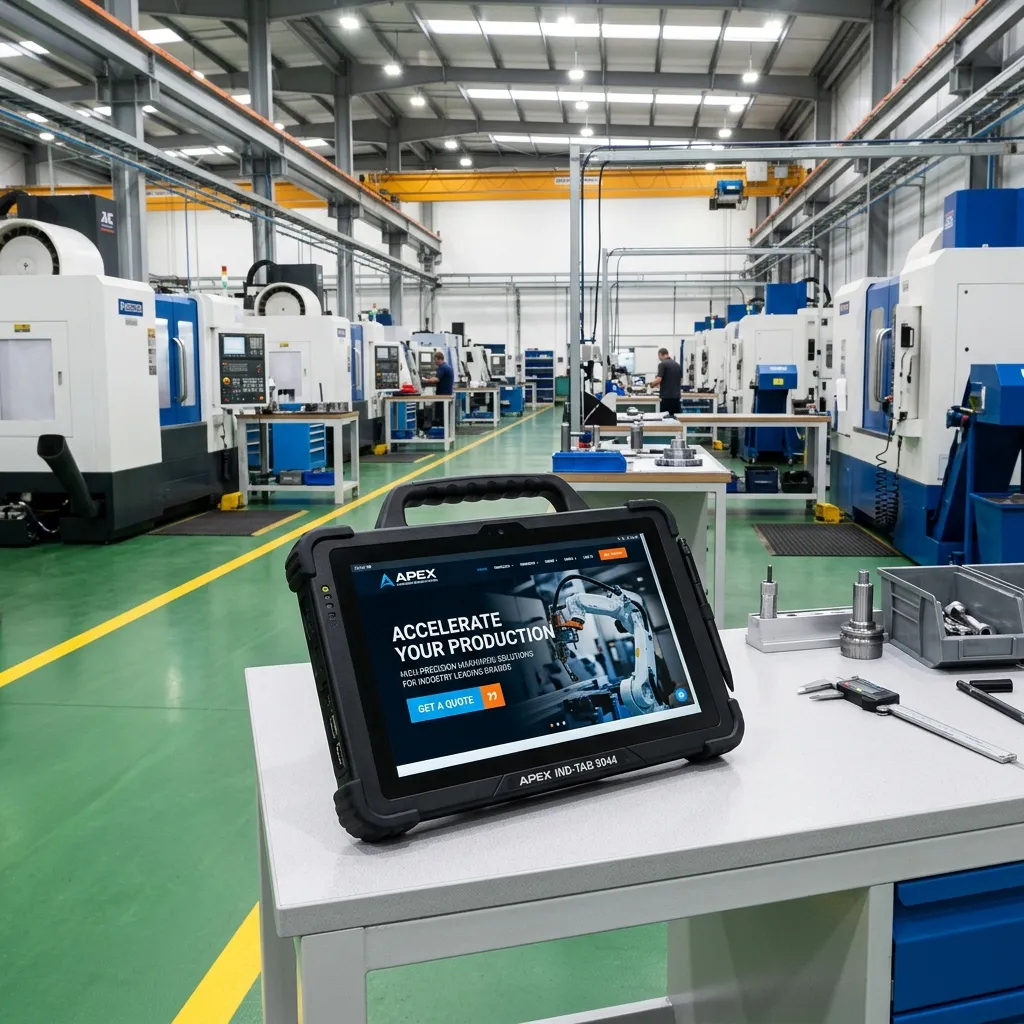
Most industrial homepages try to do too much. They open with a full-width banner showing a factory aerial view, followed by a mission statement about “providing world-class solutions,” a scrolling carousel of product categories, a grid of certification badges, a news section nobody reads, and a footer the size of a small webpage.

The intention behind all of this is understandable: show everything, prove everything, cover every possible question a buyer might have. But the result is the opposite of what was intended. Instead of projecting confidence, the page projects uncertainty — as if the company is not quite sure what its strongest message is, so it presents all of them simultaneously and hopes something sticks.

What a homepage actually needs to do

A B2B homepage has one job that matters above all others: it needs to make the buyer feel, within three seconds, that they are in the right place.

Not “impressed.” Not “overwhelmed by your scale.” Just: “Okay, this company does what I need, and they seem to know what they are doing. Let me look deeper.”

That feeling comes from specificity. A headline that says “Precision Die Casting for Automotive Powertrain Components” tells the buyer something useful. A headline that says “Your Trusted Partner for Quality Manufacturing Solutions” tells them nothing. The first headline earns three more seconds of attention. The second one earns a closed browser tab.

The mistake is not what you include — it is what you lead with

Certifications matter. Factory capacity matters. Years in business matter. But none of these should be the first thing a buyer sees. The first thing they need to see is evidence that you understand their world — not your own company history.

The strongest industrial homepages open by naming the buyer’s problem, not the company’s credentials. They say something like: “Long lead times and inconsistent quality from your current supplier? Here is how we solve that.” The credentials come later, once the buyer is already engaged.

This is a subtle but critical sequencing choice. It is the difference between a homepage that talks at the buyer and a homepage that talks to them.

After the first fold

Once you have earned the buyer’s attention with a specific, relevant opening, the rest of the homepage should act as a routing system. Not a catalog of everything you do, but a clear set of pathways into deeper content: your key industries, your core capabilities, your most compelling case evidence.

Each pathway should feel like an invitation, not a requirement. The buyer should be able to choose their own depth. Some will want to go straight to a product page. Others will want to see case studies first. A few will head directly to the contact page. The homepage’s job is to make all three paths obvious and easy.

And at the bottom, instead of a generic footer, leave a single clear question: “Ready to discuss your project?” with one button and one form. Nothing else. The buyer who has scrolled this far has already decided they are interested. Do not give them a reason to reconsider.

INDUSTRIAL DESIGN AWARD 2026