You are renting land, not building an empire
Every B2B manufacturer knows the drill. You launch an Alibaba or Global Sources storefront. You pay for Premium placements. You get inquiries. For the first two years, it feels like a reliable system.
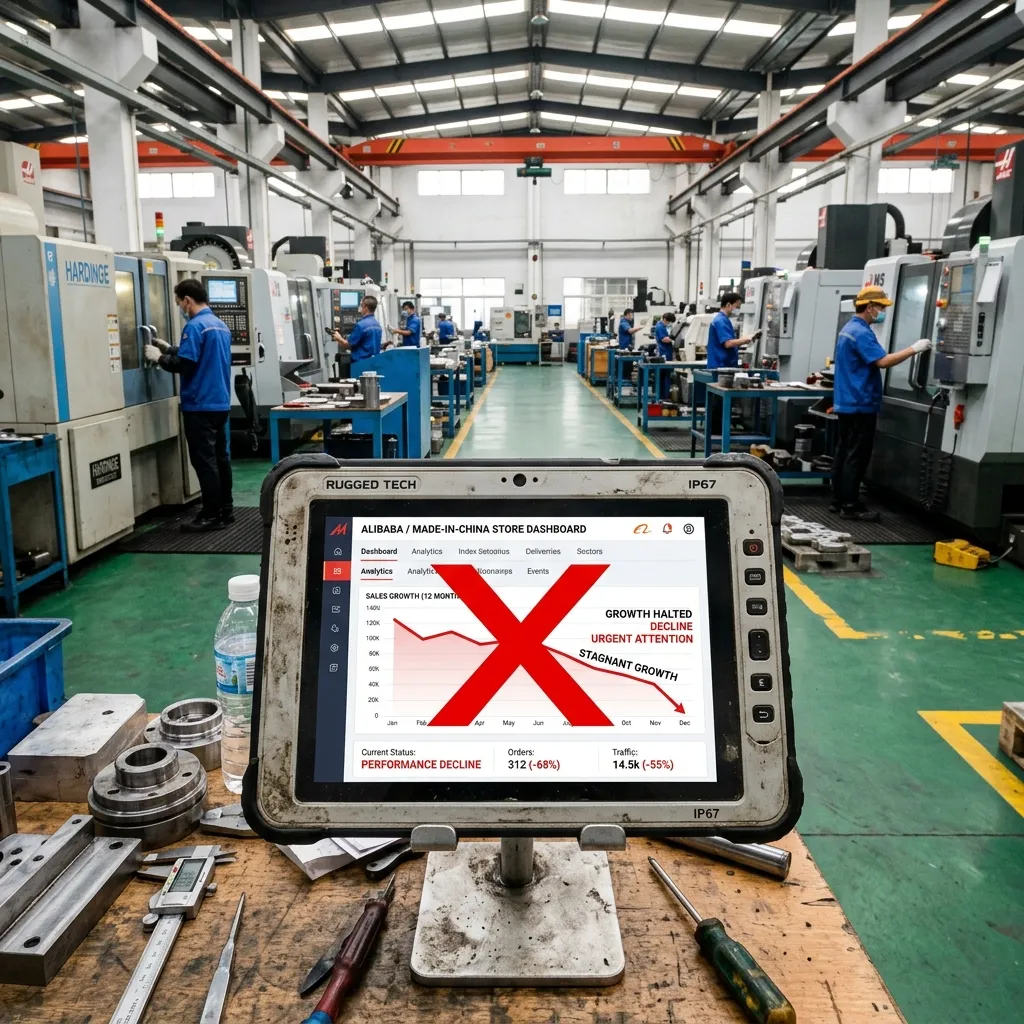
Then the ROI collapses. The cost of ads triples, the algorithm shifts to favor trading companies, and you realize you are trapped. You don’t own the data, you don’t control the branding, and your buyers are evaluating you against twenty identical suppliers on the same exact screen.
The price of convenience is margin compression
B2B platforms are designed for the platform’s benefit, not yours. They thrive by commoditizing you. When a European buyer searches for CNC machining on a platform, the UI forces them to compare suppliers entirely on price and supposed response times. There is no space to prove the superiority of your engineering tolerances or QA process.
You cannot build a premium industrial brand when your shop looks identical to a drop-shipper’s shop.
An independent website reclaims pricing power
When you own your independent website, you own the narrative. You aren’t squeezed into a templated grid. You can build comprehensive case study pages that prove your expertise in aerospace components. You control the buyer’s journey from organic search straight to your CRM without the platform taxing your leads.
Platforms are a great place to start. But if you are doing $10M in export revenue and still relying on Alibaba to feed your sales team, your business is at massive risk.