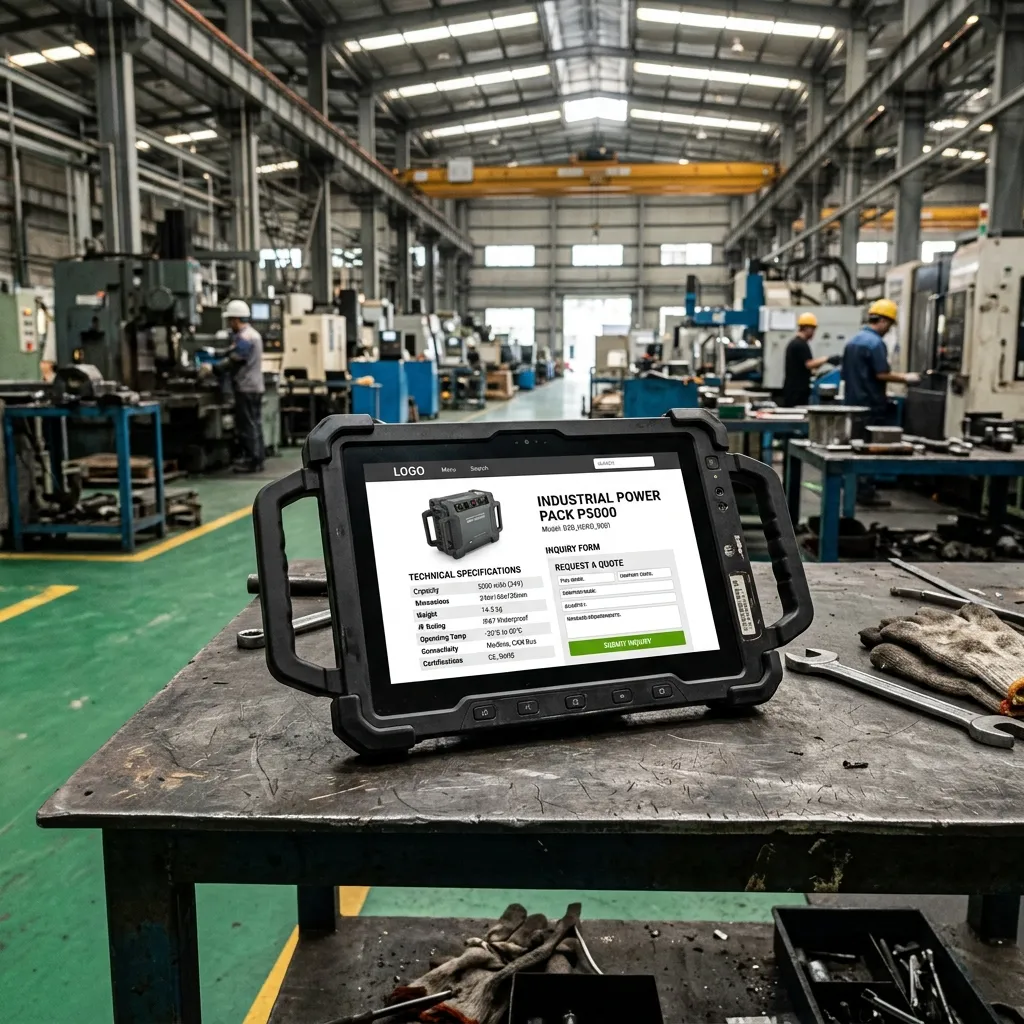
A specs table is not a sales argument
When engineers land on an industrial product page, they are immediately looking for red flags. Can this component handle high thermal loads? Is the certification legit? Do they actually machine this in-house or outsource it?
If your product page just slaps a table of dimensions next to a rotating 3D render, you are failing the engineer.
The “De-risking” Page Structure
A useful product page does more than display specs. It removes the buyer’s most obvious doubts one by one.
1. The “Application Fit” Headline: Don’t just say “Heavy Duty Gearbox.” Say “Planetary Gearboxes for Continuous-Duty Mining Equipment.” State who it’s for immediately.
2. Immediate Tolerance & Material Data: Engineers want raw data. Give them the absolute limits of your manufacturing capabilities right below the fold.
3. The Hidden “How”: This is where almost everyone fails. Don’t just claim ISO certification. Detail the specific CNC turning centers used to hit those tolerances, and outline your incoming material verification process.
4. The Frictionless Next Step: Stop asking for a full Request For Proposal to start a conversation. Offer a direct CAD download or a “Request Material Spec Sheet” button. The easier you make the initial micro-commitment, the faster you get their email.