Your dropdown menus are destroying your SEO
Many industrial websites just have a dropdown menu under “Products” listing 40 different variations. When a buyer clicks “Pumps,” they just look at a grid of 40 pump photos. This is an absolute disaster for both search engines and actual human buyers.
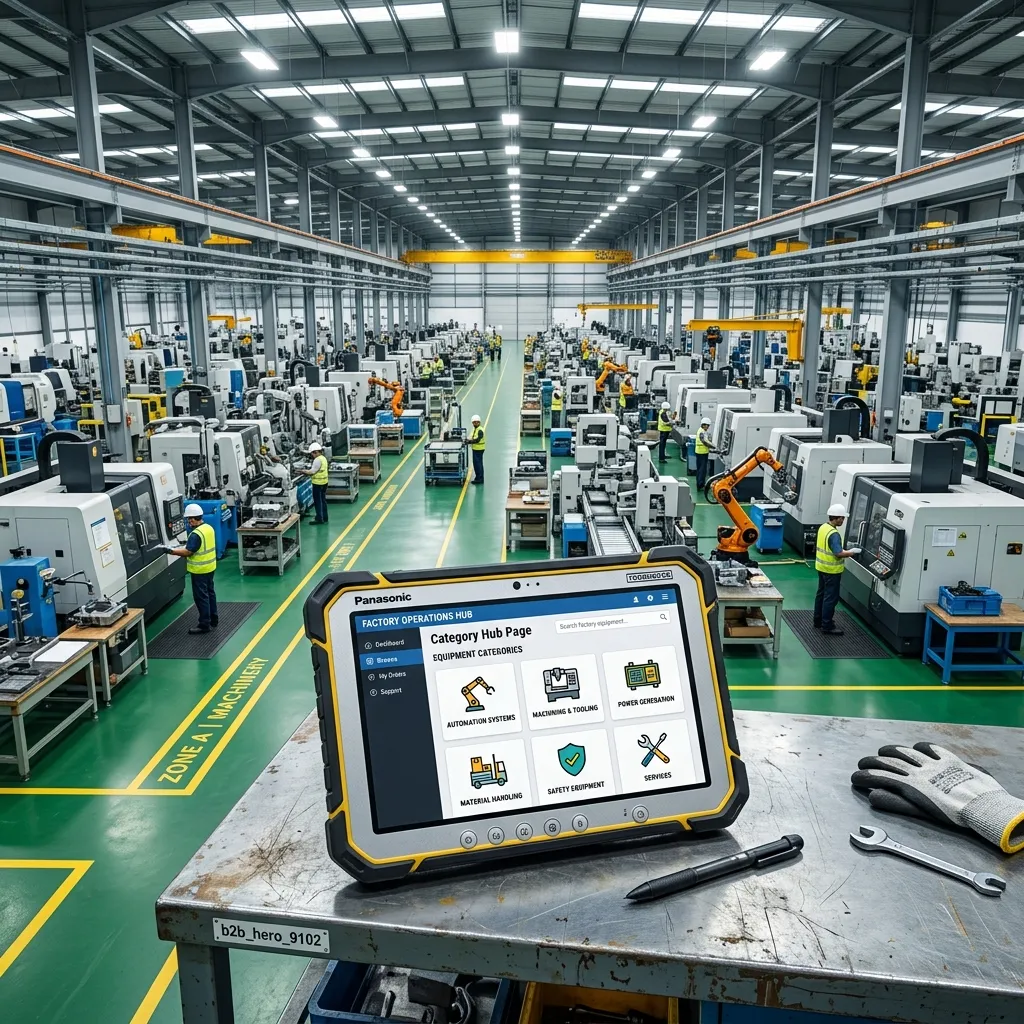
You need a Category Hub Page. It acts as the command center for a specific vertical.
The Architecture of Authority
A Category Hub Page serves two masters: it tells Google you are an authority on the overarching topic, and it helps the buyer orient themselves in a complex catalog.
1. The Definition Core: Start by defining the category. If the category is “Industrial Injection Molding,” the hub should explain your overall approach, your tonnage range (50T to 1500T), and the materials you specialize in.
2. The Application Filter: Don’t just list products. Guide the buyer. “Looking for high heat resistance? See our PEEK molding line. Need high volume packaging? Go to our multi-cavity section.” Act as a digital technical sales rep.
3. Internal Linking Power: The hub page must link down to all the specific product pages (the “spokes”), and every product page must link back to the hub. This creates a closed-loop thematic cluster that search engine crawlers reward heavily.