Resources

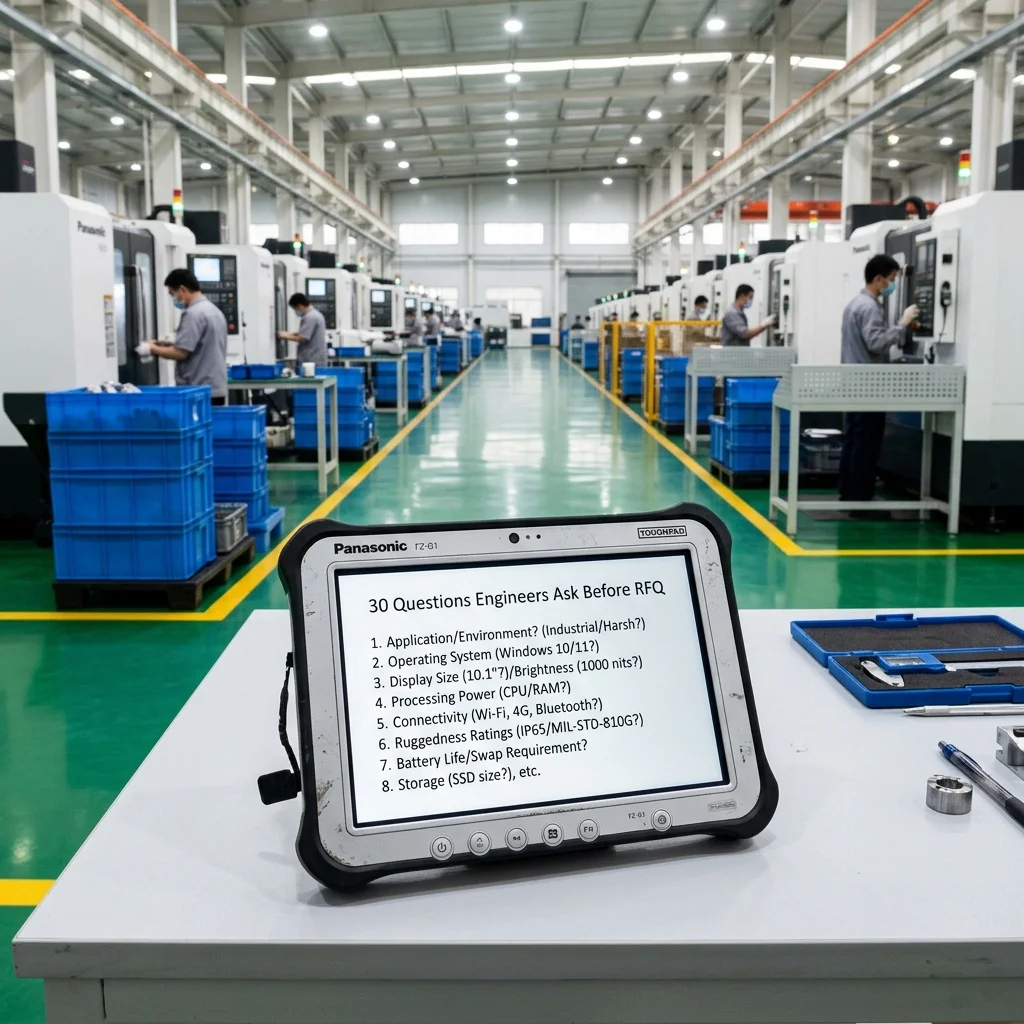
Industrial Website FAQ: 30 Questions Engineers Ask Before RFQ

RFQ HANDOFF MAP: Give sales context they can act on RFQ HANDOFF MAP Give sales context they can act on The goal is not more forms; it is better buying context. Field clarity Volume/budget Response path Buyer Decision Path 1 Page question 2 Form fields 3 Lead routing 4 Page job Industrial Website FAQ: 30 Questions Engineers Ask... Anonymized RFQ workflow sample

Industrial Website FAQ: 30 Questions Engineers Ask Before RFQ – Expert Answers

In the trenches of B2B industrial website development and SEO operations, we have compiled the 30 most critical frequently asked questions. This guide helps manufacturers and exporters avoid common pitfalls and drastically increase RFQs.

Q1: What is the average cost to build a custom B2B independent website?

For B2B industrial manufacturers, a custom independent website built for conversion typically requires an initial investment of $4,000 to $12,000. This includes not just visual front-end design, but crucially, backend SEO architecture optimization, responsive layouts for all global devices, and underlying technical restructuring for Google’s search algorithms. Opting for a sub-$1,000 template site often leads to exponentially higher marketing costs later due to bloated code and poor mobile adaptability.

Q2: Why does my website get traffic but zero inquiries (RFQs)?

High traffic with no inquiries indicates a severe mismatch between ‘traffic intent’ and ‘website content.’ First, check if your traffic comes from overly broad keywords (e.g., just ‘Machinery’). Second, if traffic is precise, your Product Detail Pages (PDPs) likely lack the hard engineering data overseas buyers demand (e.g., tolerances, material standards, capacities, lead times). Industrial procurement is highly rational; without professional trust signals, buyers will bounce in under 10 seconds.

Q3: What types of multimedia content are essential for B2B industrial websites?

Industrial buyers value ‘authentic manufacturing capability’ above all else. Therefore, you must provide: 1. Real factory floor footage (preferably highlighting core equipment); 2. 3D structural or exploded views of products showing internal craftsmanship; 3. Videos of your products operating at client sites (FAT testing); 4. Clear panoramic shots of your facility and QA/QC laboratories. These multimedia assets build trust far better than flashy marketing slogans.

Q4: How should a Product Detail Page (PDP) be structured to generate high-quality RFQs?

A high-conversion industrial PDP must possess ‘engineering-grade’ depth. It must include: precise technical specification tables (Specs), international material standards (e.g., ASTM, DIN), clear lists of applicable industries, downloadable PDF brochures or manuals, and sanitized data from successful past deliveries. Additionally, the bottom of the page must feature a clear, minimalist inquiry form (max 5 fields) to lower the barrier to contact.

Q5: Is a multi-language website necessary for B2B export?

This depends entirely on your target markets. If you are deeply cultivating South America or the Middle East, Spanish and Arabic sites are indispensable. However, never use cheap machine-translation plugins! Poor industry terminology translations (e.g., translating ‘ball valve’ to a sports ball) will instantly destroy your brand image. The correct approach: build independent subdirectories for 2-3 core markets, have native-speaking engineers proofread core terminology, and deploy Hreflang tags to secure SEO authority.

Q6: How long does it take to see results from Google SEO optimization?

In the B2B manufacturing sector, a brand new or newly reconstructed independent site typically requires 3 to 6 months to see significant organic traffic growth and RFQ conversions on Google. The first two months involve Google’s crawlers re-indexing and understanding your new content architecture. By months 3-4, long-tail keywords (e.g., specific model + application) will start ranking and bringing high-intent RFQs. After 6 months, rankings for core industry terms will gradually stabilize. SEO is a marathon, not a sprint.

Q7: Why is Contact Form design considered a matter of life and death for conversions?

B2B buyers’ time is incredibly valuable. If your form requires them to fill out their company fax number, founding year, or a detailed zip code, 90% of potential clients will simply abandon the page. High-conversion form design should be minimalist: only ask for Name, Corporate Email, Requirement/Application, and provide an attachment button for CAD drawings or PDFs. Detailed information can be easily gathered during the first email exchange.

Q8: How can FAQ pages boost organic search traffic?

FAQ pages are exceptional weapons for intercepting high-intent long-tail traffic. Before placing an order, overseas buyers often search highly specific questions (e.g., ‘How long does it take to import a 5000 sqm steel warehouse from China?’). By structuring these real pain points into an FAQ page and embedding Schema.org structured data, your answers have a chance to appear as ‘Rich Snippets’ directly at the top of Google search results, securing a massive competitive advantage.

Q9: What is the relationship between an independent website and B2B platforms like Alibaba?

They are not mutually exclusive; they are complementary. Platforms like Alibaba provide initial traffic and ‘price-shopper’ buyers, but platform competition is fierce and rules are volatile. An independent website is your ‘brand moat’ and ‘digital asset.’ It attracts high-net-worth clients, secures higher order values, and is free from platform constraints. Mature export enterprises use platforms to maintain base revenue while utilizing their independent site to conquer major accounts and high-profit orders.

Q10: Should B2B websites frequently update their Blog with company news?

It is entirely unnecessary to post fluff news like ‘Company Team Building Today.’ B2B buyers do not care. What you must update are ‘Professional Resources.’ For example: share the latest industry technical whitepapers, analyze the successful delivery of a complex custom project, or provide an application guide for a new type of material. Deep content establishes your industry authority and attracts high-quality prospects in the research phase.

Q11: Is Mobile Responsiveness really important for industrial websites?

Crucially important. While filling out a complex RFQ with blueprints might ultimately happen on a desktop, over 50% of B2B procurement professionals use their smartphones for initial supplier screening during commutes or between meetings. If your site takes over 3 seconds to load on mobile, or if images and forms are misaligned and unclickable, you have already been eliminated in the first round of competition.

Q12: Why are our overseas ad costs increasing while ROI is dropping?

Because you are trapped in a bidding war for ‘red ocean’ broad keywords. Pouring money into a term like ‘Packaging Machine’ can cost tens of dollars per click, and the intent of those clicks is wildly mixed. The correct strategy is to combine ads with SEO, shifting your ad budget toward highly specific ‘long-tail intent keywords’ (e.g., ‘Automatic liquid filling machine for pharmaceutical industry’). This dramatically lowers CPC while geometrically increasing conversion rates.

Q13: Does an SSL Certificate (HTTPS) actually impact website performance?

It is a life-or-death foundational requirement. Websites without an SSL certificate are flagged as ‘Not Secure’ by Google Chrome and other major browsers. Imagine an overseas buyer preparing to send you blueprints containing confidential designs; what will they think when they see a ‘Not Secure’ warning? Furthermore, HTTPS is a confirmed, explicit ranking signal in Google’s algorithms.

Q14: How can we prove our Quality Control (QC) capabilities to overseas buyers?

Don’t just write ‘We have strict quality control.’ You must display objective evidence: upload clear scans of international certifications like ISO, CE, or API; showcase actual photos of your in-house testing equipment like CMMs (Coordinate Measuring Machines) or spectrometers; and provide a sanitized, real Factory Acceptance Test (FAT) report for download on your product pages. Authentic data and equipment are the ultimate proof of quality.

Q15: What are the common reasons a website gets penalized or de-indexed by Google?

The most common reasons include: massively plagiarizing product descriptions from competitors or B2B platforms (Duplicate Content); using black-hat SEO tactics (like buying thousands of low-quality spam backlinks); the site being hacked and injected with malicious code due to prolonged neglect; or using severely outdated plugins that drastically slow down load times. Recovery is a painfully long process requiring professional auditing and cleanup.

Q16: How can we utilize YouTube videos to drive traffic to our independent site?

Industrial manufacturing is visually compelling. Film high-quality videos of your machines operating at high speeds or the precision machining of molds. Upload these to YouTube, and insert links directly to your specific product pages within the video Description. Simultaneously, embed these videos on your website pages. This effectively lowers your site’s bounce rate while intercepting a continuous stream of precise traffic from the world’s second-largest search engine.

Q17: What is Website Bounce Rate, and what is considered normal?

Bounce rate is the percentage of visitors who leave the website after viewing only a single page. For B2B industrial websites, 50% – 60% is a healthy range. If it’s above 85%, your landing page content severely mismatches the visitor’s search intent, or your site is loading excruciatingly slowly. If it’s below 10%, it’s highly likely that your Google Analytics code is installed twice or there is a tracking error.

Q18: How should A/B testing be conducted on a B2B website?

In the industrial sector, traffic is relatively limited, so avoid frequent, massive site overhauls. Correct A/B testing should start small: test whether a ‘Get a Quote’ button in orange or blue attracts more clicks; test if placing the form on the right sidebar versus the bottom yields higher conversions; test if moving core technical specs above the fold increases visitor dwell time. Data-driven micro-adjustments often yield surprisingly powerful results.

Q19: Why do websites built by general web agencies always fall short of expectations?

Because most traditional agencies only understand ‘coding’ and ‘layout’; they do not understand your ‘industrial business logic.’ They don’t know what CNC tolerances imply, nor do they grasp the critical importance of API standards for valves. A B2B website that actually wins orders must be led by marketing engineers who understand the industry and buyer psychology, translating your technical advantages into commercial language buyers comprehend.

Q20: How can we evaluate if an SEO/Web Development agency is truly professional?

Ignore fake slogans guaranteeing ‘first-page rankings.’ Look at whether they conduct deep research into your industry’s long-tail keywords; whether they demand real factory photos and technical docs instead of buying generic stock images; and whether their ultimate KPI is the ‘RFQ Conversion Rate’ rather than just reporting inflated ‘clicks’ and ‘impressions.’ A professional agency is a strategic partner for your business growth.

Q21: Can AI-generated content (AI Content) help B2B websites?

AI is a powerful assistive tool, but it must never be simply copy-pasted. Google’s algorithms can easily detect soulless, purely AI-generated articles. In the B2B sector, AI lacks knowledge of your factory’s specific craftsmanship and historical delivery cases. The correct approach: have your engineers provide the core parameters, data, and story frameworks, then use AI for linguistic polishing and structural reorganization, ensuring the content is deeply insightful yet native-reading.

Q22: Our products are highly customized and cannot be priced. How should we build the site?

High customization is exactly the strength of a B2B independent site. You do not need to display prices like a B2C e-commerce store. What you must showcase is ‘Customization Capability.’ Detail your Prototyping Workflow, Design for Manufacturability (DFM) capabilities, and provide industry-specific custom case studies. Change your CTA to ‘Upload your drawing for a free engineering review’—this dramatically increases conversions from high-value clients.

Q23: What is the use of a CDN (Content Delivery Network) for an export website?

If your server is in Hong Kong or the US, clients in Europe or the Middle East will experience very slow load times. A CDN caches your website’s static resources (images, CSS, JS) on node servers worldwide. When a German client visits, they actually fetch data from a node in Frankfurt. This can slash page load times from 5 seconds to under 1 second, instantly saving massive amounts of potential clients lost to waiting.

Q24: How do we write an engaging ‘About Us’ page?

Abandon boring openers like ‘We were established in [Year] and cover [X] acres.’ Overseas buyers want to see your core competencies, corporate values, and team strength. Display photos of your engineering team, core patent certificates, and key milestones in your enterprise’s history. Most importantly, answer ‘Why Choose Us’—is it lightning-fast lead times? Stringent quality control? Or flexible payment terms?

Q25: What is Structured Data (Schema.org)?

Structured data is JSON-formatted code embedded in a webpage, serving as a specific language ‘spoken directly to search engines.’ For B2B websites, the most crucial types are Product Schema (marking models and brands), FAQ Schema (marking Q&As), and Organization Schema (marking addresses and contacts). Correctly deploying structured data allows your site to display richer formats in Google search results, significantly boosting Click-Through Rates (CTR).

Q26: Our competitor’s website is excellent. Can we just copy their content?

Absolutely not. Directly copying a competitor’s text or images will be flagged by Google as Duplicate Content, risking severe ranking penalties or de-indexing. The correct strategy is ‘pixel-level deconstruction’: analyze which core long-tail keywords they use, how their page architecture is laid out, and what pain points they target. Then, combining your own factory’s unique advantages, create original content that is far more detailed, professional, and differentiated.

Q27: Where should the server for an export website be located?

The server should be located as close to your core target market as possible. If you primarily export to North America, choose a US West or East Coast server; if targeting globally, a US node combined with a global CDN is recommended. Never place a globally-targeted website on a server inside mainland China, as cross-border firewalls and international bandwidth limitations will cause excruciatingly slow access or total failure for overseas visitors.

Q28: Is Social Media (like LinkedIn) effective for driving B2B website traffic?

In the B2B sector, LinkedIn is the most effective social platform, bar none. Do not post hard-sell advertisements. Instead, share the deeply researched technical blogs and industry solution pages from your website onto LinkedIn. This not only drives high-quality professional traffic to your site but also massively elevates your brand’s authoritative image in the minds of overseas engineers and procurement decision-makers.

Q29: How can we tell if our website has been hacked?

Common signs of a hack include: the website suddenly loading extremely slowly or redirecting to illegal sites (gambling, porn); searching your brand name on Google and finding descriptions filled with strange Japanese characters or spam links; and anomalous spikes in server traffic. If this happens, you must immediately contact professional tech support to clean the backdoors, upgrade WordPress/plugins, and deploy an advanced Web Application Firewall (WAF).

Q30: Are web development and SEO one-time jobs?

This is a widespread misconception. Building a website is just constructing the ship; SEO is the wind that makes it sail. As Google’s algorithms constantly update, competitors push harder, and market demands shift, your website must continuously output high-quality content, regularly monitor technical health, and constantly optimize User Experience (UX). In the digital age, operating a B2B independent site is a strategic asset requiring ongoing, long-term investment.

Is Your Website Facing the Same Issues?

Don’t let your independent B2B website become a dead, silent billboard. Give your industrial website a comprehensive health check today.

Get AutomakeSite’s Deep Website Diagnostic Service Now, uncover the root causes of your poor conversion rates, and kickstart your engine for high-quality inquiries!

{ “@context”: “https://schema.org”, “@type”: “FAQPage”, “mainEntity”: [ { “@type”: “Question”, “name”: “What is the average cost to build a custom B2B independent website?”, “acceptedAnswer”: { “@type”: “Answer”, “text”: “For B2B industrial manufacturers, a custom independent website built for conversion typically requires an initial investment of $4,000 to $12,000. This includes not just visual front-end design, but crucially, backend SEO architecture optimization, responsive layouts for all global devices, and underlying technical restructuring for Google’s search algorithms. Opting for a sub-$1,000 template site often leads to exponentially higher marketing costs later due to bloated code and poor mobile adaptability.” } }, { “@type”: “Question”, “name”: “Why does my website get traffic but zero inquiries (RFQs)?”, “acceptedAnswer”: { “@type”: “Answer”, “text”: “High traffic with no inquiries indicates a severe mismatch between ‘traffic intent’ and ‘website content.’ First, check if your traffic comes from overly broad keywords (e.g., just ‘Machinery’). Second, if traffic is precise, your Product Detail Pages (PDPs) likely lack the hard engineering data overseas buyers demand (e.g., tolerances, material standards, capacities, lead times). Industrial procurement is highly rational; without professional trust signals, buyers will bounce in under 10 seconds.” } }, { “@type”: “Question”, “name”: “What types of multimedia content are essential for B2B industrial websites?”, “acceptedAnswer”: { “@type”: “Answer”, “text”: “Industrial buyers value ‘authentic manufacturing capability’ above all else. Therefore, you must provide: 1. Real factory floor footage (preferably highlighting core equipment); 2. 3D structural or exploded views of products showing internal craftsmanship; 3. Videos of your products operating at client sites (FAT testing); 4. Clear panoramic shots of your facility and QA/QC laboratories. These multimedia assets build trust far better than flashy marketing slogans.” } }, { “@type”: “Question”, “name”: “How should a Product Detail Page (PDP) be structured to generate high-quality RFQs?”, “acceptedAnswer”: { “@type”: “Answer”, “text”: “A high-conversion industrial PDP must possess ‘engineering-grade’ depth. It must include: precise technical specification tables (Specs), international material standards (e.g., ASTM, DIN), clear lists of applicable industries, downloadable PDF brochures or manuals, and sanitized data from successful past deliveries. Additionally, the bottom of the page must feature a clear, minimalist inquiry form (max 5 fields) to lower the barrier to contact.” } }, { “@type”: “Question”, “name”: “Is a multi-language website necessary for B2B export?”, “acceptedAnswer”: { “@type”: “Answer”, “text”: “This depends entirely on your target markets. If you are deeply cultivating South America or the Middle East, Spanish and Arabic sites are indispensable. However, never use cheap machine-translation plugins! Poor industry terminology translations (e.g., translating ‘ball valve’ to a sports ball) will instantly destroy your brand image. The correct approach: build independent subdirectories for 2-3 core markets, have native-speaking engineers proofread core terminology, and deploy Hreflang tags to secure SEO authority.” } }, { “@type”: “Question”, “name”: “How long does it take to see results from Google SEO optimization?”, “acceptedAnswer”: { “@type”: “Answer”, “text”: “In the B2B manufacturing sector, a brand new or newly reconstructed independent site typically requires 3 to 6 months to see significant organic traffic growth and RFQ conversions on Google. The first two months involve Google’s crawlers re-indexing and understanding your new content architecture. By months 3-4, long-tail keywords (e.g., specific model + application) will start ranking and bringing high-intent RFQs. After 6 months, rankings for core industry terms will gradually stabilize. SEO is a marathon, not a sprint.” } }, { “@type”: “Question”, “name”: “Why is Contact Form design considered a matter of life and death for conversions?”, “acceptedAnswer”: { “@type”: “Answer”, “text”: “B2B buyers’ time is incredibly valuable. If your form requires them to fill out their company fax number, founding year, or a detailed zip code, 90% of potential clients will simply abandon the page. High-conversion form design should be minimalist: only ask for Name, Corporate Email, Requirement/Application, and provide an attachment button for CAD drawings or PDFs. Detailed information can be easily gathered during the first email exchange.” } }, { “@type”: “Question”, “name”: “How can FAQ pages boost organic search traffic?”, “acceptedAnswer”: { “@type”: “Answer”, “text”: “FAQ pages are exceptional weapons for intercepting high-intent long-tail traffic. Before placing an order, overseas buyers often search highly specific questions (e.g., ‘How long does it take to import a 5000 sqm steel warehouse from China?’). By structuring these real pain points into an FAQ page and embedding Schema.org structured data, your answers have a chance to appear as ‘Rich Snippets’ directly at the top of Google search results, securing a massive competitive advantage.” } }, { “@type”: “Question”, “name”: “What is the relationship between an independent website and B2B platforms like Alibaba?”, “acceptedAnswer”: { “@type”: “Answer”, “text”: “They are not mutually exclusive; they are complementary. Platforms like Alibaba provide initial traffic and ‘price-shopper’ buyers, but platform competition is fierce and rules are volatile. An independent website is your ‘brand moat’ and ‘digital asset.’ It attracts high-net-worth clients, secures higher order values, and is free from platform constraints. Mature export enterprises use platforms to maintain base revenue while utilizing their independent site to conquer major accounts and high-profit orders.” } }, { “@type”: “Question”, “name”: “Should B2B websites frequently update their Blog with company news?”, “acceptedAnswer”: { “@type”: “Answer”, “text”: “It is entirely unnecessary to post fluff news like ‘Company Team Building Today.’ B2B buyers do not care. What you must update are ‘Professional Resources.’ For example: share the latest industry technical whitepapers, analyze the successful delivery of a complex custom project, or provide an application guide for a new type of material. Deep content establishes your industry authority and attracts high-quality prospects in the research phase.” } }, { “@type”: “Question”, “name”: “Is Mobile Responsiveness really important for industrial websites?”, “acceptedAnswer”: { “@type”: “Answer”, “text”: “Crucially important. While filling out a complex RFQ with blueprints might ultimately happen on a desktop, over 50% of B2B procurement professionals use their smartphones for initial supplier screening during commutes or between meetings. If your site takes over 3 seconds to load on mobile, or if images and forms are misaligned and unclickable, you have already been eliminated in the first round of competition.” } }, { “@type”: “Question”, “name”: “Why are our overseas ad costs increasing while ROI is dropping?”, “acceptedAnswer”: { “@type”: “Answer”, “text”: “Because you are trapped in a bidding war for ‘red ocean’ broad keywords. Pouring money into a term like ‘Packaging Machine’ can cost tens of dollars per click, and the intent of those clicks is wildly mixed. The correct strategy is to combine ads with SEO, shifting your ad budget toward highly specific ‘long-tail intent keywords’ (e.g., ‘Automatic liquid filling machine for pharmaceutical industry’). This dramatically lowers CPC while geometrically increasing conversion rates.” } }, { “@type”: “Question”, “name”: “Does an SSL Certificate (HTTPS) actually impact website performance?”, “acceptedAnswer”: { “@type”: “Answer”, “text”: “It is a life-or-death foundational requirement. Websites without an SSL certificate are flagged as ‘Not Secure’ by Google Chrome and other major browsers. Imagine an overseas buyer preparing to send you blueprints containing confidential designs; what will they think when they see a ‘Not Secure’ warning? Furthermore, HTTPS is a confirmed, explicit ranking signal in Google’s algorithms.” } }, { “@type”: “Question”, “name”: “How can we prove our Quality Control (QC) capabilities to overseas buyers?”, “acceptedAnswer”: { “@type”: “Answer”, “text”: “Don’t just write ‘We have strict quality control.’ You must display objective evidence: upload clear scans of international certifications like ISO, CE, or API; showcase actual photos of your in-house testing equipment like CMMs (Coordinate Measuring Machines) or spectrometers; and provide a sanitized, real Factory Acceptance Test (FAT) report for download on your product pages. Authentic data and equipment are the ultimate proof of quality.” } }, { “@type”: “Question”, “name”: “What are the common reasons a website gets penalized or de-indexed by Google?”, “acceptedAnswer”: { “@type”: “Answer”, “text”: “The most common reasons include: massively plagiarizing product descriptions from competitors or B2B platforms (Duplicate Content); using black-hat SEO tactics (like buying thousands of low-quality spam backlinks); the site being hacked and injected with malicious code due to prolonged neglect; or using severely outdated plugins that drastically slow down load times. Recovery is a painfully long process requiring professional auditing and cleanup.” } }, { “@type”: “Question”, “name”: “How can we utilize YouTube videos to drive traffic to our independent site?”, “acceptedAnswer”: { “@type”: “Answer”, “text”: “Industrial manufacturing is visually compelling. Film high-quality videos of your machines operating at high speeds or the precision machining of molds. Upload these to YouTube, and insert links directly to your specific product pages within the video Description. Simultaneously, embed these videos on your website pages. This effectively lowers your site’s bounce rate while intercepting a continuous stream of precise traffic from the world’s second-largest search engine.” } }, { “@type”: “Question”, “name”: “What is Website Bounce Rate, and what is considered normal?”, “acceptedAnswer”: { “@type”: “Answer”, “text”: “Bounce rate is the percentage of visitors who leave the website after viewing only a single page. For B2B industrial websites, 50% – 60% is a healthy range. If it’s above 85%, your landing page content severely mismatches the visitor’s search intent, or your site is loading excruciatingly slowly. If it’s below 10%, it’s highly likely that your Google Analytics code is installed twice or there is a tracking error.” } }, { “@type”: “Question”, “name”: “How should A/B testing be conducted on a B2B website?”, “acceptedAnswer”: { “@type”: “Answer”, “text”: “In the industrial sector, traffic is relatively limited, so avoid frequent, massive site overhauls. Correct A/B testing should start small: test whether a ‘Get a Quote’ button in orange or blue attracts more clicks; test if placing the form on the right sidebar versus the bottom yields higher conversions; test if moving core technical specs above the fold increases visitor dwell time. Data-driven micro-adjustments often yield surprisingly powerful results.” } }, { “@type”: “Question”, “name”: “Why do websites built by general web agencies always fall short of expectations?”, “acceptedAnswer”: { “@type”: “Answer”, “text”: “Because most traditional agencies only understand ‘coding’ and ‘layout’; they do not understand your ‘industrial business logic.’ They don’t know what CNC tolerances imply, nor do they grasp the critical importance of API standards for valves. A B2B website that actually wins orders must be led by marketing engineers who understand the industry and buyer psychology, translating your technical advantages into commercial language buyers comprehend.” } }, { “@type”: “Question”, “name”: “How can we evaluate if an SEO/Web Development agency is truly professional?”, “acceptedAnswer”: { “@type”: “Answer”, “text”: “Ignore fake slogans guaranteeing ‘first-page rankings.’ Look at whether they conduct deep research into your industry’s long-tail keywords; whether they demand real factory photos and technical docs instead of buying generic stock images; and whether their ultimate KPI is the ‘RFQ Conversion Rate’ rather than just reporting inflated ‘clicks’ and ‘impressions.’ A professional agency is a strategic partner for your business growth.” } }, { “@type”: “Question”, “name”: “Can AI-generated content (AI Content) help B2B websites?”, “acceptedAnswer”: { “@type”: “Answer”, “text”: “AI is a powerful assistive tool, but it must never be simply copy-pasted. Google’s algorithms can easily detect soulless, purely AI-generated articles. In the B2B sector, AI lacks knowledge of your factory’s specific craftsmanship and historical delivery cases. The correct approach: have your engineers provide the core parameters, data, and story frameworks, then use AI for linguistic polishing and structural reorganization, ensuring the content is deeply insightful yet native-reading.” } }, { “@type”: “Question”, “name”: “Our products are highly customized and cannot be priced. How should we build the site?”, “acceptedAnswer”: { “@type”: “Answer”, “text”: “High customization is exactly the strength of a B2B independent site. You do not need to display prices like a B2C e-commerce store. What you must showcase is ‘Customization Capability.’ Detail your Prototyping Workflow, Design for Manufacturability (DFM) capabilities, and provide industry-specific custom case studies. Change your CTA to ‘Upload your drawing for a free engineering review’—this dramatically increases conversions from high-value clients.” } }, { “@type”: “Question”, “name”: “What is the use of a CDN (Content Delivery Network) for an export website?”, “acceptedAnswer”: { “@type”: “Answer”, “text”: “If your server is in Hong Kong or the US, clients in Europe or the Middle East will experience very slow load times. A CDN caches your website’s static resources (images, CSS, JS) on node servers worldwide. When a German client visits, they actually fetch data from a node in Frankfurt. This can slash page load times from 5 seconds to under 1 second, instantly saving massive amounts of potential clients lost to waiting.” } }, { “@type”: “Question”, “name”: “How do we write an engaging ‘About Us’ page?”, “acceptedAnswer”: { “@type”: “Answer”, “text”: “Abandon boring openers like ‘We were established in [Year] and cover [X] acres.’ Overseas buyers want to see your core competencies, corporate values, and team strength. Display photos of your engineering team, core patent certificates, and key milestones in your enterprise’s history. Most importantly, answer ‘Why Choose Us’—is it lightning-fast lead times? Stringent quality control? Or flexible payment terms?” } }, { “@type”: “Question”, “name”: “What is Structured Data (Schema.org)?”, “acceptedAnswer”: { “@type”: “Answer”, “text”: “Structured data is JSON-formatted code embedded in a webpage, serving as a specific language ‘spoken directly to search engines.’ For B2B websites, the most crucial types are Product Schema (marking models and brands), FAQ Schema (marking Q&As), and Organization Schema (marking addresses and contacts). Correctly deploying structured data allows your site to display richer formats in Google search results, significantly boosting Click-Through Rates (CTR).” } }, { “@type”: “Question”, “name”: “Our competitor’s website is excellent. Can we just copy their content?”, “acceptedAnswer”: { “@type”: “Answer”, “text”: “Absolutely not. Directly copying a competitor’s text or images will be flagged by Google as Duplicate Content, risking severe ranking penalties or de-indexing. The correct strategy is ‘pixel-level deconstruction’: analyze which core long-tail keywords they use, how their page architecture is laid out, and what pain points they target. Then, combining your own factory’s unique advantages, create original content that is far more detailed, professional, and differentiated.” } }, { “@type”: “Question”, “name”: “Where should the server for an export website be located?”, “acceptedAnswer”: { “@type”: “Answer”, “text”: “The server should be located as close to your core target market as possible. If you primarily export to North America, choose a US West or East Coast server; if targeting globally, a US node combined with a global CDN is recommended. Never place a globally-targeted website on a server inside mainland China, as cross-border firewalls and international bandwidth limitations will cause excruciatingly slow access or total failure for overseas visitors.” } }, { “@type”: “Question”, “name”: “Is Social Media (like LinkedIn) effective for driving B2B website traffic?”, “acceptedAnswer”: { “@type”: “Answer”, “text”: “In the B2B sector, LinkedIn is the most effective social platform, bar none. Do not post hard-sell advertisements. Instead, share the deeply researched technical blogs and industry solution pages from your website onto LinkedIn. This not only drives high-quality professional traffic to your site but also massively elevates your brand’s authoritative image in the minds of overseas engineers and procurement decision-makers.” } }, { “@type”: “Question”, “name”: “How can we tell if our website has been hacked?”, “acceptedAnswer”: { “@type”: “Answer”, “text”: “Common signs of a hack include: the website suddenly loading extremely slowly or redirecting to illegal sites (gambling, porn); searching your brand name on Google and finding descriptions filled with strange Japanese characters or spam links; and anomalous spikes in server traffic. If this happens, you must immediately contact professional tech support to clean the backdoors, upgrade WordPress/plugins, and deploy an advanced Web Application Firewall (WAF).” } }, { “@type”: “Question”, “name”: “Are web development and SEO one-time jobs?”, “acceptedAnswer”: { “@type”: “Answer”, “text”: “This is a widespread misconception. Building a website is just constructing the ship; SEO is the wind that makes it sail. As Google’s algorithms constantly update, competitors push harder, and market demands shift, your website must continuously output high-quality content, regularly monitor technical health, and constantly optimize User Experience (UX). In the digital age, operating a B2B independent site is a strategic asset requiring ongoing, long-term investment.” } } ] }
NEXT STEP

Find where this issue sits in your website funnel.

Run the 3-minute self-assessment to separate traffic, trust, content, form, and sales-handoff problems before requesting a diagnostic.

INDUSTRIAL DESIGN AWARD 2026