
OSHA 1910.176: Material Storage Compliance Guide for Rack Systems
Regulations, Inspections & Best Practices
In industrial storage operations, compliance with OSHA 1910.176 isn’t just about avoiding fines—it’s about protecting your workers, reducing downtime, and building a culture of safety. For facilities using heavy-duty cantilever rack systems, understanding the nuances of this standard is critical. This guide breaks down OSHA 1910.176 requirements, shows how Tcrack rack systems are engineered to meet them, and provides actionable steps to maintain compliance over time.
What is OSHA 1910.176?
OSHA 1910.176 is the federal regulation titled “Handling materials – general,” part of Subpart N (Materials Handling and Storage) of the Occupational Safety and Health Standards. It sets forth mandatory requirements for material storage practices, aisle management, and safety procedures to protect workers from hazards related to material storage, handling, and retrieval.
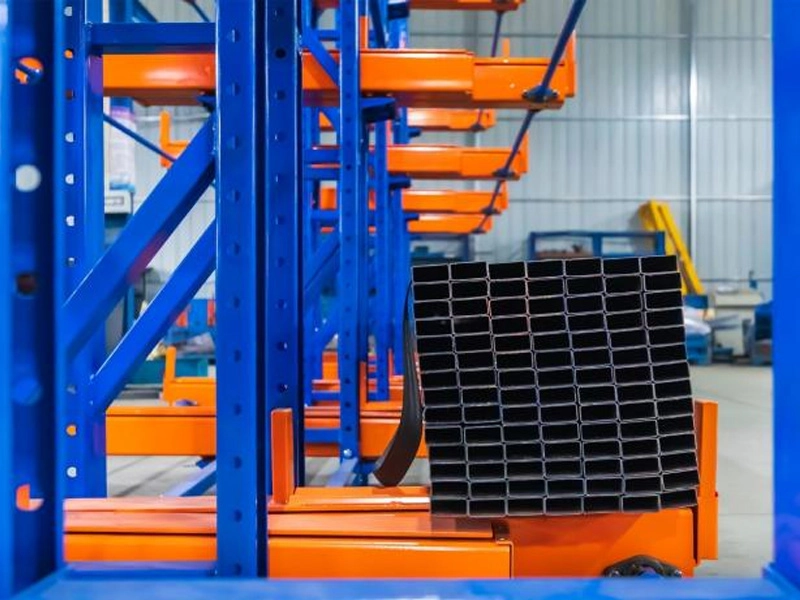
Key OSHA 1910.176 Requirements at a Glance:
• 1910.176(a): Sufficient safe clearances for aisles, loading docks, doorways, and turns; aisles kept clear and in good repair; permanent aisles appropriately marked
• 1910.176(b): Secure storage of materials in tiers—stacked, blocked, interlocked, and limited in height to ensure stability and prevent sliding or collapse
• 1910.176(c): Housekeeping: storage areas kept free from tripping, fire, explosion, or pest hazards; vegetation control when necessary
• 1910.176(e): Clearance signs to warn of overhead clearance limits
• 1910.176(g): Covers and/or guardrails to protect personnel from open pits, tanks, vats, ditches, etc.
Why OSHA 1910.176 Matters for Your Facility
The consequences of non-compliance with OSHA 1910.176 can be severe—fines can range from thousands to tens of thousands of dollars per violation, depending on severity and willfulness. But beyond financial penalties, the human cost of non-compliance is far greater: slip-and-fall accidents, falling materials, and tip-over incidents can result in serious injury or even death. Investing in compliant rack systems and safety procedures protects your most valuable asset—your people—and keeps your operations running smoothly.
In 2024, OSHA issued over 3,500 violations related to material handling and storage, with average fines exceeding $12,000 per serious violation
How Tcrack Telescopic Cantilever Racks Support OSHA Compliance
Tcrack telescopic cantilever rack systems are purpose-built to address OSHA 1910.176 requirements from the ground up. Every component—from base anchors to safety stops—is engineered with compliance and worker safety in mind:
Tcrack racks feature integrated mechanical safety stops on every arm to prevent over-extension, a common OSHA violation risk
- Secure Storage (1910.176(b)): Tiered, interlocked design ensures load stability; rated capacities from 1,000 kg (TC-1000) up to 5,000 kg (TC-5000) per arm, depending on arm length, with clear load labeling to prevent overloading
- Clear Aisles (1910.176(a)): Narrow aisle design (1–1.5m) maximizes storage density while maintaining required safe clearances; no need for 4–6m forklift aisles, reducing both space and accident risks
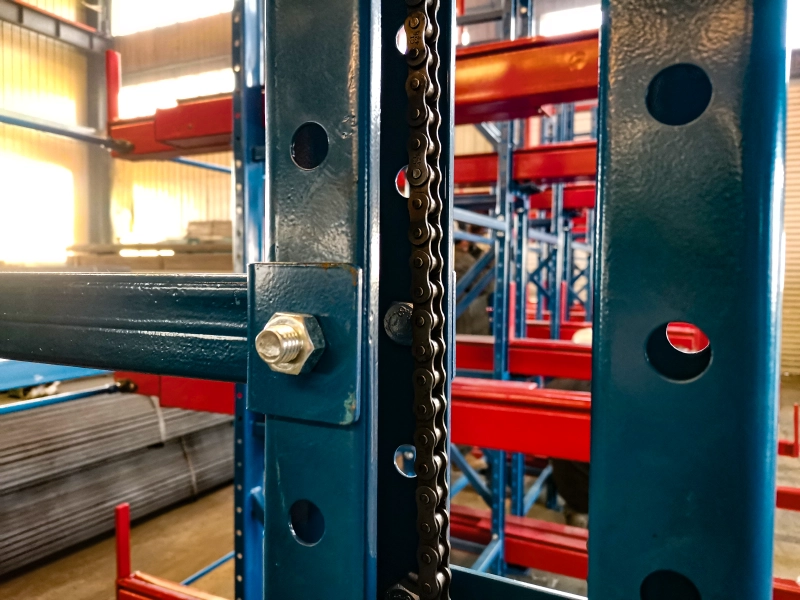
- Ergonomic Operation & No Climbing (1910.176(a/g)): Chain drive systems for high-level racks bring operation down to an ergonomic height (1.2–1.5m above floor), eliminating the need for workers to climb or use ladders, which reduces fall hazards
- Visual Safety Cues: Color-coded components, clear load rating labels, and prominent safety stops provide at-a-glance visual guidance for safe operation, supporting OSHA’s emphasis on clear communication
- Stable Foundation (1910.176(b)): H-beam base structure with stack feet and expansion anchors; designed for minimum 150–200mm concrete thickness and 0.5 MPa+ ground pressure to prevent structural shift or collapse
- Synchronous Transmission for Multi-Upright Systems: 4-upright or 8-upright configurations use precision synchronous transmission shafts to ensure 6–12m long arms extend in perfect parallel, eliminating binding and uneven load distribution that could cause instability
OSHA-Compliant Rack Inspection Checklist (Weekly & Monthly)
Regular inspections are required to maintain OSHA 1910.176 compliance and identify potential hazards before they cause accidents. Use this checklist for your routine rack audits:
Weekly Inspection Checklist
1. All arms are properly extended/retracted and secured in position
2. Mechanical safety stops are intact and functional
3. Loads are evenly distributed and within rated capacity
4. Aisles and passageways are clear of obstructions
5. No visible damage to arms, columns, or base structure
6. Chain drive and gear mechanisms are operating smoothly
Monthly Inspection Checklist
1. Verify base anchors are tight and floor condition is good (no cracks, settlement)
2. Lubricate chain drive and gear mechanisms per manufacturer specs
3. Check alignment of synchronous transmission shafts (for multi-upright systems)
4. Inspect bearing housings and seals for industrial dust intrusion
5. Review and update load rating labels if faded or damaged
6. Confirm all personnel have received current safety training
Annual/Quarterly Deep Inspection
1. Full structural audit by a qualified engineer (for heavy-load systems)
2. Load testing verification (per Rack Load Testing Guide)
3. Review of incident logs and near-misses to identify recurring issues
4. Update of safety procedures and training materials as needed
Foundation & Installation Requirements for OSHA Compliance
A proper foundation is non-negotiable for both OSHA compliance and long-term rack safety. Tcrack systems are engineered with strict foundation requirements:
Minimum 150–200mm concrete thickness with 0.5 MPa+ ground pressure capacity; outdoor or heavy-load applications may require secondary grouting or chemical anchors
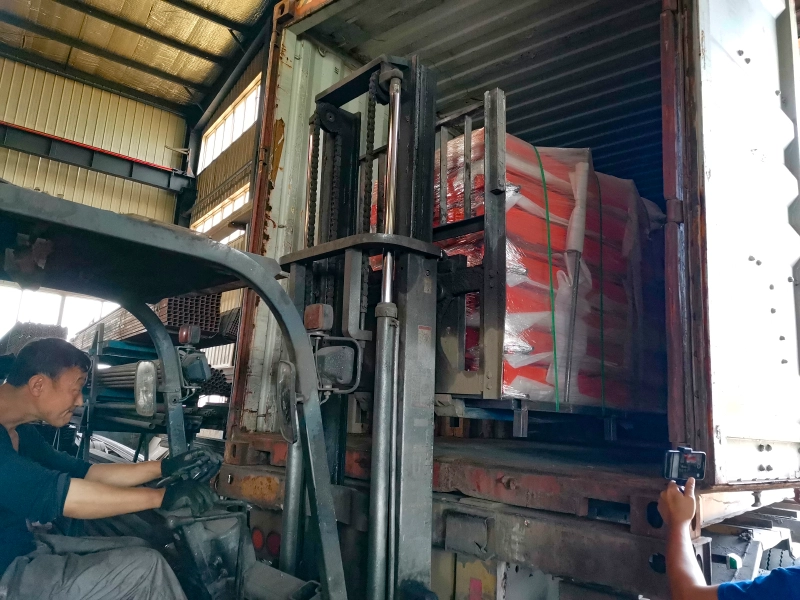
During installation, follow these OSHA-aligned steps:
- Verify floor concrete thickness and compressive strength before drilling
- Use only manufacturer-specified expansion anchors or chemical anchors
- Ensure proper alignment of uprights to prevent twisting or binding
- For TE Series (assembled) racks, verify synchronous transmission shaft concentricity (laser-cut precision is critical to avoid binding)
- Mark permanent aisles clearly with floor paint or tape per 1910.176(a)
- Document installation with photos and measurements for compliance records
The 3 Non-Negotiable Safety Red Lines for Rack Operation
To maintain OSHA compliance and protect your workers, never cross these three safety red lines—they are non-negotiable:
No Overloading
Single Level Only
No Personnel Under Arms
These rules aren’t just suggestions—they are based on OSHA requirements and real-world accident prevention data. Violating any of them can result in serious injury, equipment damage, or OSHA fines. Let’s break them down further:
- No Overloading: Every Tcrack arm has a clearly marked load capacity (e.g., TC-1000 = 1,000 kg, TC-2000 = 2,000 kg, TC-3000 = 3,000 kg, TC-5000 = 5,000 kg). Exceeding this capacity risks structural failure and violates OSHA 1910.176(b).
- Single Level Only: Never extend more than one cantilever level at a time. Extending multiple levels shifts the center of gravity, creating a severe tip-over hazard that violates OSHA 1910.176(b) and basic safety principles.
- No Personnel Under Arms: When an arm is extended, no personnel should be under the load or arm—use overhead cranes or other lifting devices to handle materials, and keep the area clear. This complies with OSHA 1910.176(a) and (g) by preventing falling object hazards.
Real-World Example: OSHA Compliance in Action
A steel service center in the Midwest recently upgraded their traditional fixed cantilever racks to Tcrack telescopic systems. Before the upgrade, they had three OSHA violations in two years: one for blocked aisles, one for unstable storage, and one for a fall incident when a worker climbed a rack to reach a high level. After installing Tcrack racks:
- Aisles were reduced from 5m to 1.2m, eliminating blocked aisle issues
- Chain drive systems eliminated climbing, reducing fall hazards to zero
- Load stability improved due to interlocked tier design and clear load labeling
- OSHA inspections in the following two years resulted in zero material handling violations
- Worker productivity increased by 35% due to faster material access
For a deeper dive into these rules, read our article on 3 Safety Red Lines Every Rack Operator Must Know. To compare Tcrack’s two product series, check out TC vs TE Series: Which One Fits Your Warehouse?. For the engineering behind stable rack design, see Anti-Tipping Design: The Physics Behind Rack Stability. If you’re planning a new installation, our Foundation Requirements for Heavy-Duty Rack Systems guide provides full specifications. To understand load testing requirements, read our Rack Load Testing Guide.
Ready to ensure your rack system is fully OSHA-compliant and optimized for safety?