
Powder Coating vs Paint
Why Surface Treatment Matters for Industrial Racks
Why Surface Treatment Matters for Industrial Rack Systems
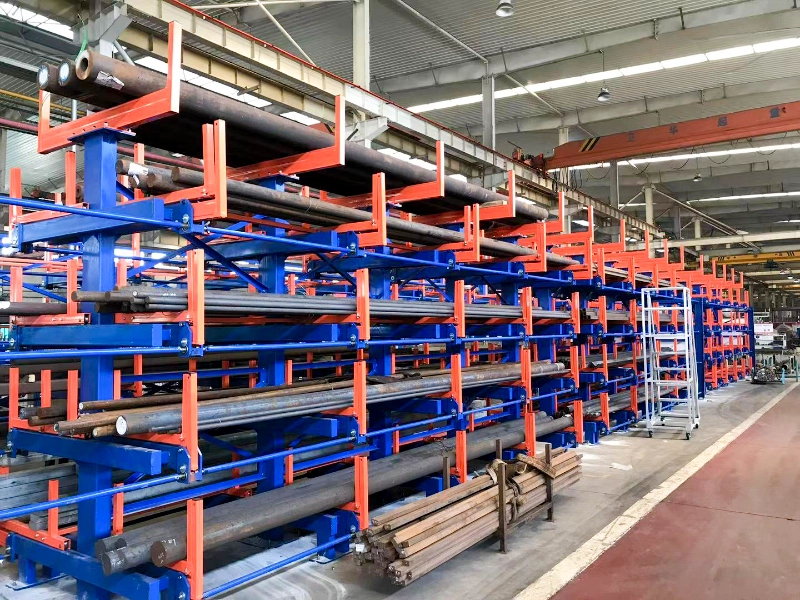
An industrial rack system lives in one of the harshest environments imaginable: temperature swings, humidity, forklift impacts, abrasive metal-on-metal contact, and chemical exposure from cutting fluids or cleaning agents. The surface treatment you choose determines whether your rack investment lasts 5 years or 25. For telescopic cantilever racks handling heavy steel, aluminum, and other metals daily, this decision carries real financial weight.
Powder Coating vs Traditional Paint: The Fundamentals
Traditional wet paint and electrostatic powder coating both protect steel from corrosion, but they achieve it through fundamentally different processes — and the performance gap is significant.
Wet Paint (Liquid Coating)
Conventional industrial paint is a liquid mixture of pigment, resin, solvent, and additives. It’s sprayed onto the steel surface and cures through solvent evaporation. The process is familiar and relatively inexpensive for small batches, but it comes with inherent limitations:
- Typical film thickness: 25–50 μm per coat
- Requires multiple coats for adequate protection (primer + topcoat minimum)
- Solvent-based formulations release VOCs (volatile organic compounds) during curing
- Prone to runs, drips, and uneven coverage on complex geometries
- Lower impact and abrasion resistance compared to powder coating
Electrostatic Powder Coating
Powder coating uses finely ground particles of pigment and resin — no solvent. The powder is electrostatically charged and sprayed onto a grounded steel part, where it clings uniformly to every surface. The coated part then enters a curing oven at 180–200°C, where the powder melts and cross-links into a continuous, chemically bonded film.
- Typical film thickness: 60–120 μm in a single application
- Near-zero VOC emissions
- Superior adhesion through electrostatic attraction and thermal fusion
- Excellent coverage on edges, corners, and recessed areas
- Overspray is recoverable and recyclable (up to 98% material utilization)
Performance Comparison: Where Powder Coating Wins
Corrosion Resistance
In standardized salt spray testing (ASTM B117), powder-coated steel panels consistently outperform wet-painted panels by 70% or more in hours to first corrosion. A quality polyester powder coat on properly pretreated steel can exceed 1,000 hours of salt spray exposure — critical for racks in humid warehouses, coastal facilities, or environments where cutting fluids and coolants are present.
Impact and Abrasion Resistance
This is where the difference becomes most visible in daily warehouse operations. Forklifts bump into rack columns. Overhead cranes occasionally swing loads into arms. Steel bars scrape across cantilever surfaces during loading and unloading. Powder coating’s thicker, thermally fused film absorbs these impacts far better than paint, which tends to chip and flake, exposing bare steel to rapid oxidation.
Chemical Resistance
Industrial warehouses aren’t clean rooms. Hydraulic fluid leaks, cutting oil drips, and cleaning solvents are part of daily life. Powder coating’s cross-linked polymer structure resists chemical attack better than most single-component paint systems, maintaining its protective barrier even after repeated exposure.
UV Stability
For outdoor or semi-outdoor storage applications, UV degradation matters. Polyester-based powder coatings offer excellent UV resistance, maintaining color and gloss for years. Wet paint, particularly alkyd-based formulations, tends to chalk and fade significantly faster under sun exposure.
Why CFS Tcrack Uses Electrostatic Powder Coating
CFS specifies electrostatic powder coating as the standard surface treatment for all Tcrack and TE Rack systems. The standard color palette includes RAL 7016 (Anthracite Grey) and RAL 2008 (Bright Red Orange) — chosen not just for aesthetics but for practical visibility and safety marking in warehouse environments.
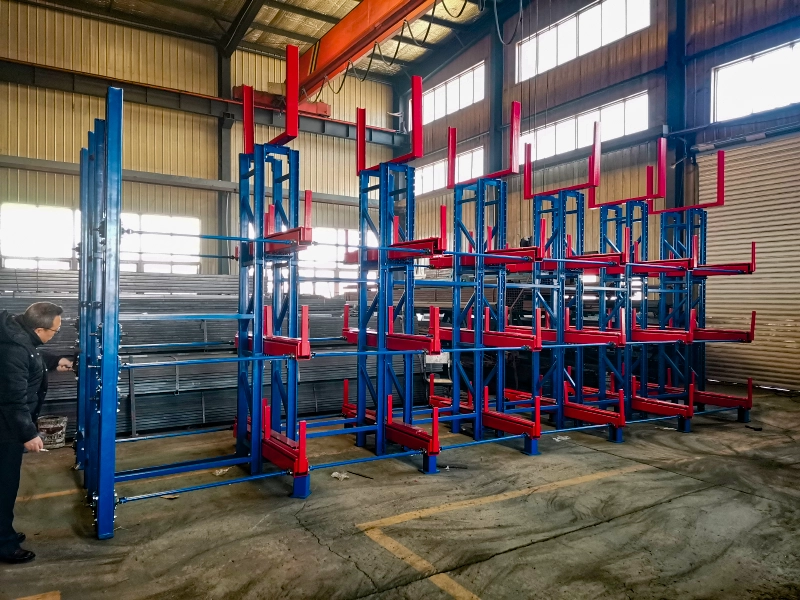
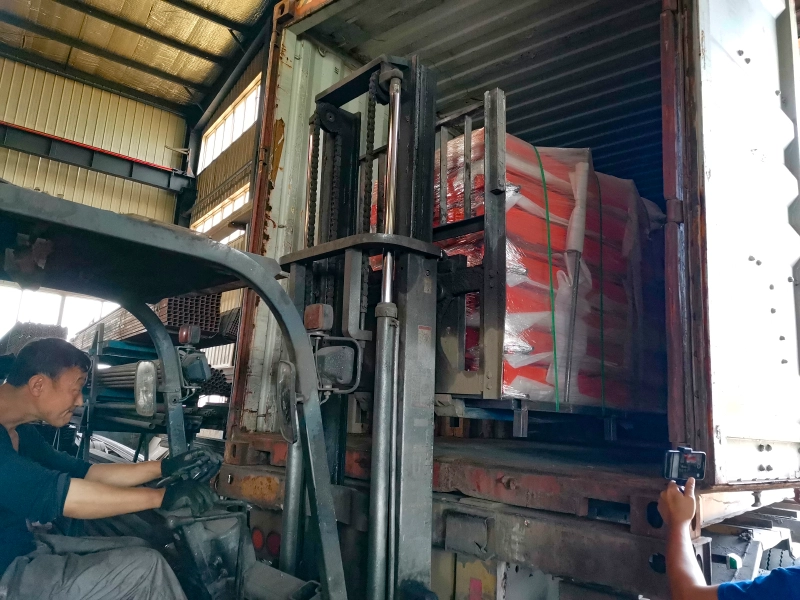
For the TE Rack series (knock-down/assembled design), the powder coating process demands extra precision. Each component — columns, arms, cross-braces, base frames — is individually coated before shipping. Since these parts are assembled on-site rather than welded in the factory, every bolt hole, edge, and mating surface must have complete coating coverage to prevent corrosion at connection points after assembly.
Surface Preparation: The Step Most People Overlook
No coating — powder or paint — performs well on poorly prepared steel. The pretreatment process is arguably more important than the coating itself:
1. Degreasing: Alkaline wash removes oils, cutting fluids, and handling residues
2. Rust removal: Shot blasting or acid pickling strips mill scale and existing corrosion to bare metal (Sa 2.5 standard per ISO 8501-1)
3. Phosphating or iron phosphate conversion: Creates a crystalline layer that dramatically improves coating adhesion and provides a secondary corrosion barrier
4. Drying: Complete moisture removal before powder application prevents outgassing defects during curing
Skipping or rushing any of these steps — particularly on heavy structural steel components like rack columns and base frames — leads to premature coating failure regardless of how good the topcoat is.
Cost Analysis: Short-Term vs Long-Term
Powder coating costs approximately 15–30% more than equivalent wet paint application upfront. However, the total cost of ownership over a rack system’s 20+ year lifespan tells a different story:
- Recoating frequency: Wet-painted racks in active warehouses typically need touch-up or recoating every 3–5 years. Powder-coated racks can go 10–15 years before needing attention.
- Downtime costs: Recoating means taking rack bays out of service, relocating stored material, and disrupting warehouse operations. Each recoating cycle costs far more in lost productivity than the paint itself.
- Corrosion damage: Once paint fails and corrosion starts, structural steel loses cross-section. A rack column that’s lost 10% of its wall thickness to rust has lost far more than 10% of its load capacity. Replacement costs dwarf any coating savings.
Special Considerations for Heavy Material Storage
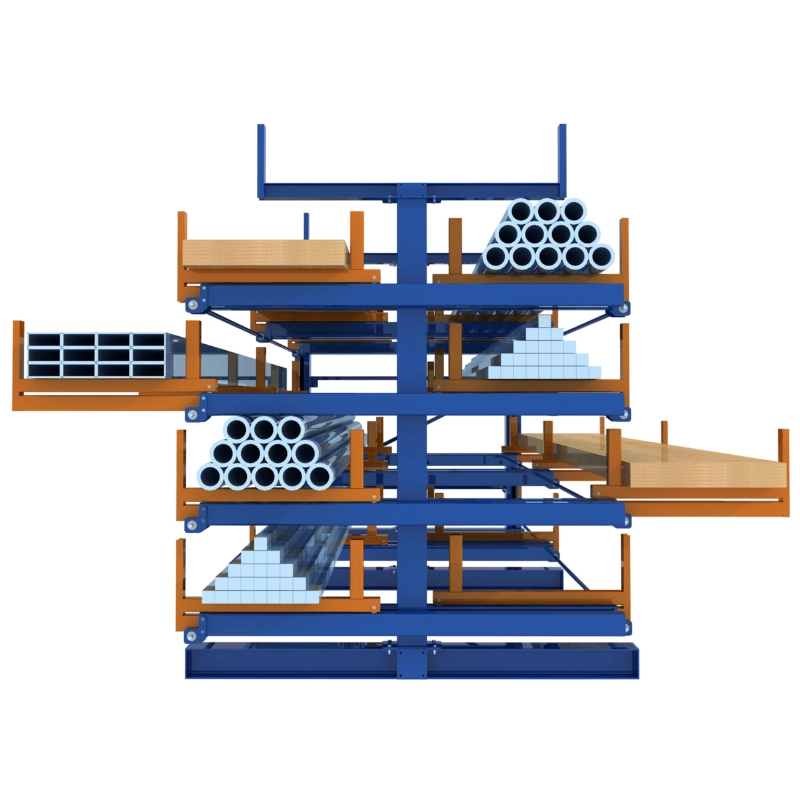
Telescopic cantilever racks face surface treatment challenges that standard pallet racks don’t. The cantilever arms experience direct metal-to-metal contact with stored materials — steel bars, pipes, aluminum extrusions — during every loading and unloading cycle. This abrasive contact zone requires:
- Higher film thickness on arm top surfaces (80–120 μm minimum)
- Optional UHMW polyethylene liners for storing sensitive materials like aerospace-grade aluminum, where even powder coating contact could cause surface contamination
- Rubber or polyurethane pads on arm surfaces for applications requiring zero-scratch handling, such as aerospace panel storage
Making the Right Choice for Your Facility
For any industrial rack system expected to last more than a few years in an active warehouse environment, electrostatic powder coating is the clear winner. The upfront premium pays for itself many times over through reduced maintenance, longer service life, and better protection of both the rack structure and the valuable materials stored on it.
When evaluating rack suppliers, ask about their pretreatment process, powder coating specifications (film thickness, salt spray test hours), and whether components are coated before or after welding. These details separate quality manufacturers from those cutting corners.
Questions About Rack Surface Treatment or Specifications? Reach out for a technical consultation.